

Different Together: An Interview with Kevin Droe of the Spectrum Project
This article by Emily Stowe reminds us that students do not need to become the same to belong. In inclusive music classrooms, differences are not something to overcome, but something to build with. When students are invited to contribute as they are, the music becomes richer, and the classroom becomes a place where connection grows through difference, not in spite of it.
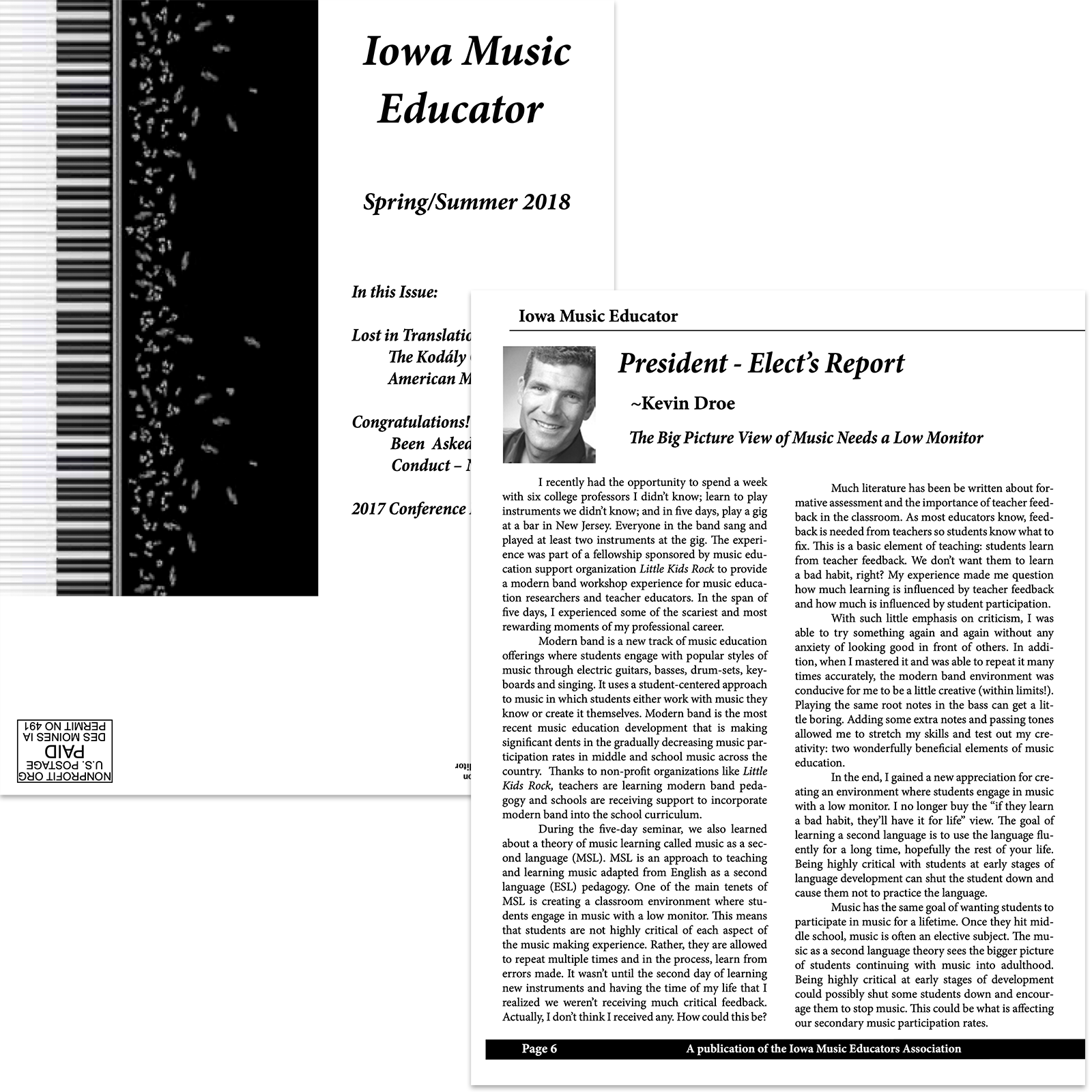
The Big Picture View of Music Needs a Low Monitor
What if learning music is less about fixing mistakes and more about creating space to try? In a low-pressure environment with minimal criticism, learners are more willing to experiment, repeat, and grow. This approach shifts the focus from early perfection to long-term participation, suggesting that how we teach in the beginning may determine whether students continue making music for life.
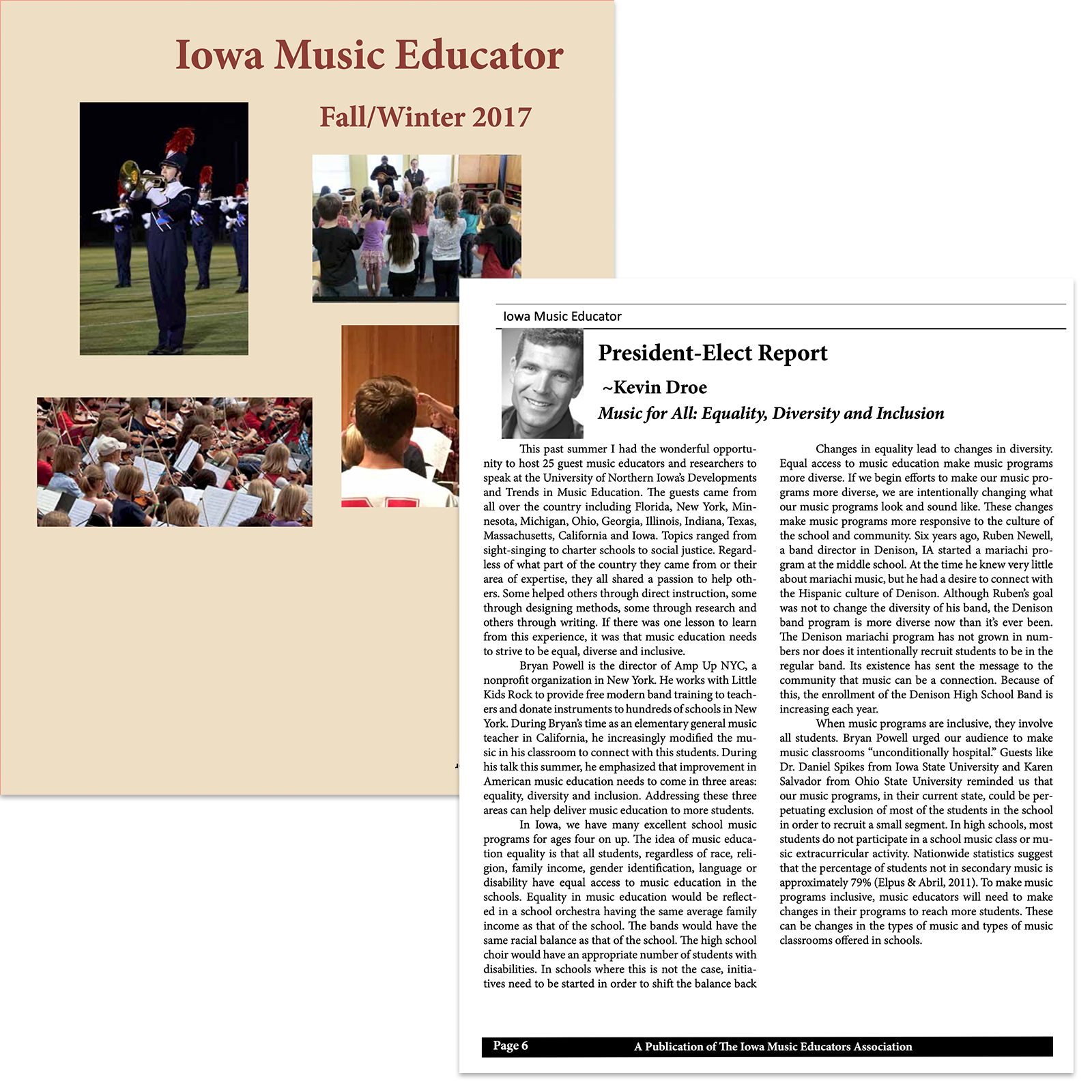
Music for All: Equality, Diversity and Inclusion
Music for all does not happen by accident. It requires intentional efforts to ensure that every student has access, feels represented, and is invited to participate. When music programs reflect the diversity of their schools and communities, they become more meaningful and more connected. Expanding access is not just about increasing numbers. It is about rethinking what we offer so more students can see themselves in the music.
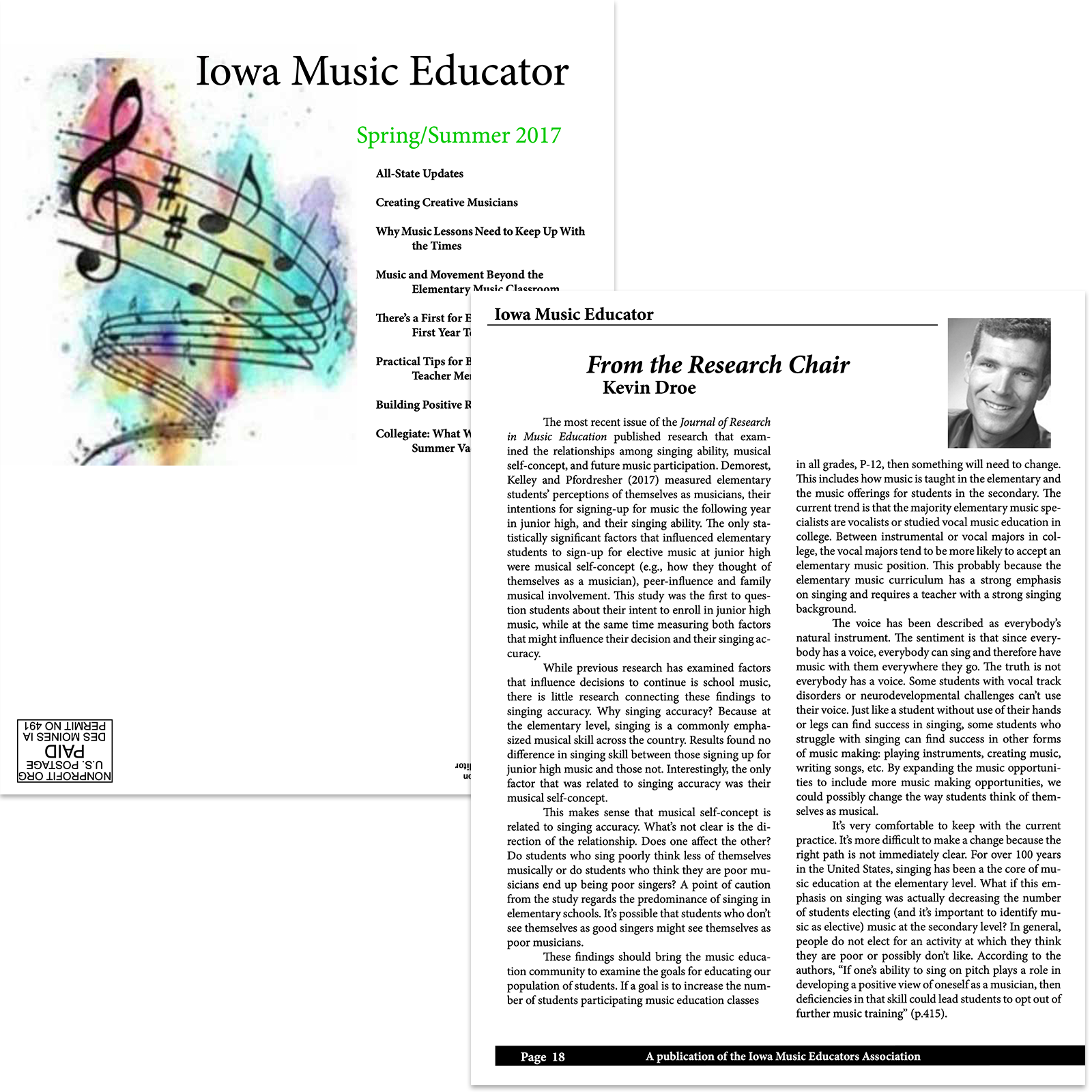
The Effect of Singing on Self-concept
Students do not continue in music simply because they are skilled. They continue when they see themselves as musicians. While singing is often central in elementary programs, it may also shape how students define their own musical ability. When students struggle with singing, they may begin to view themselves as non-musical, even when they could succeed in other forms of music-making. Expanding opportunities beyond singing may be key to helping more students stay involved in music.
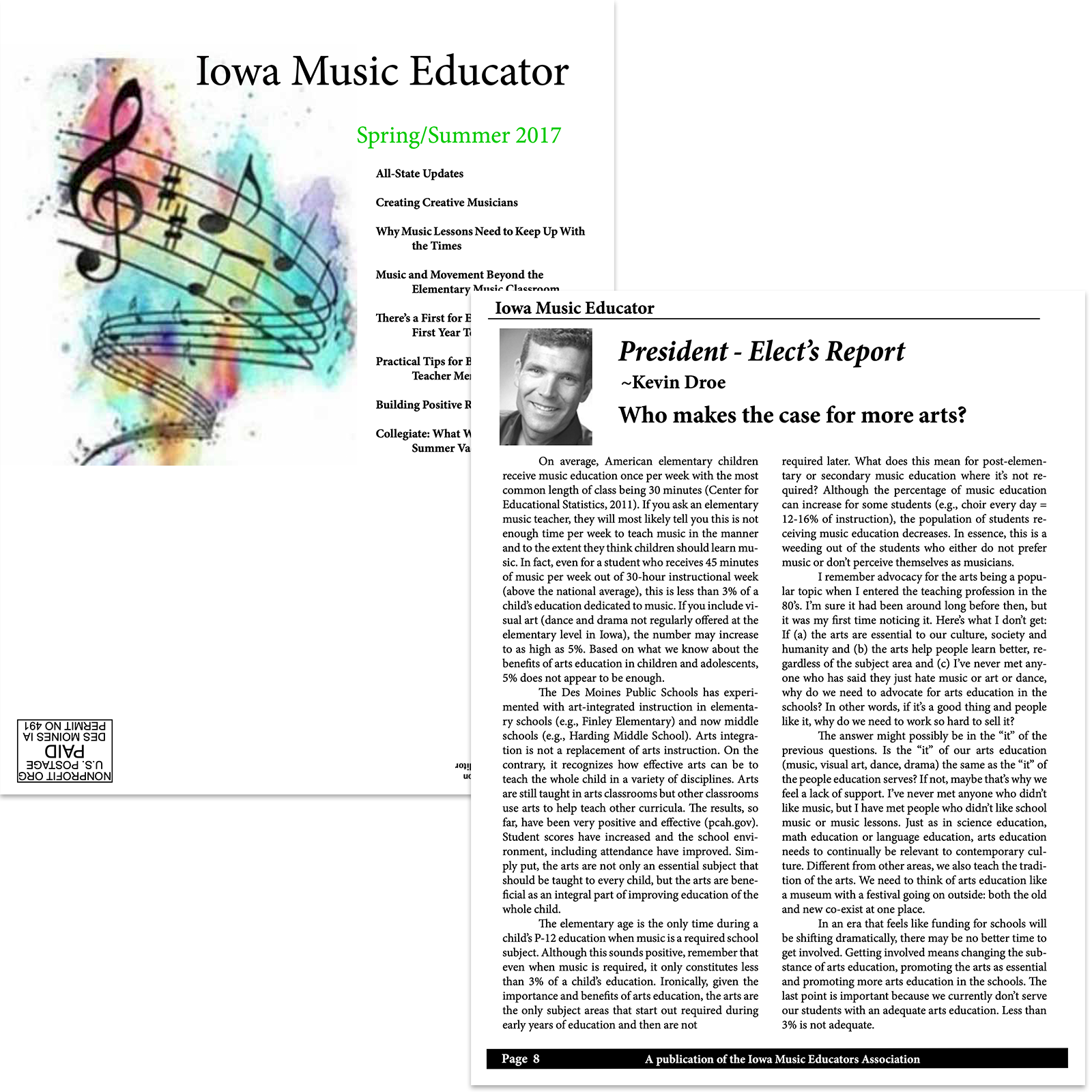
Who makes the case for more arts?
If the arts are as valuable as we say they are, why do we still have to argue for their place in schools? That question sits at the heart of this issue. Students may technically have access to music education, but when it accounts for less than three percent of their school experience, it becomes clear that access is not the same as priority.
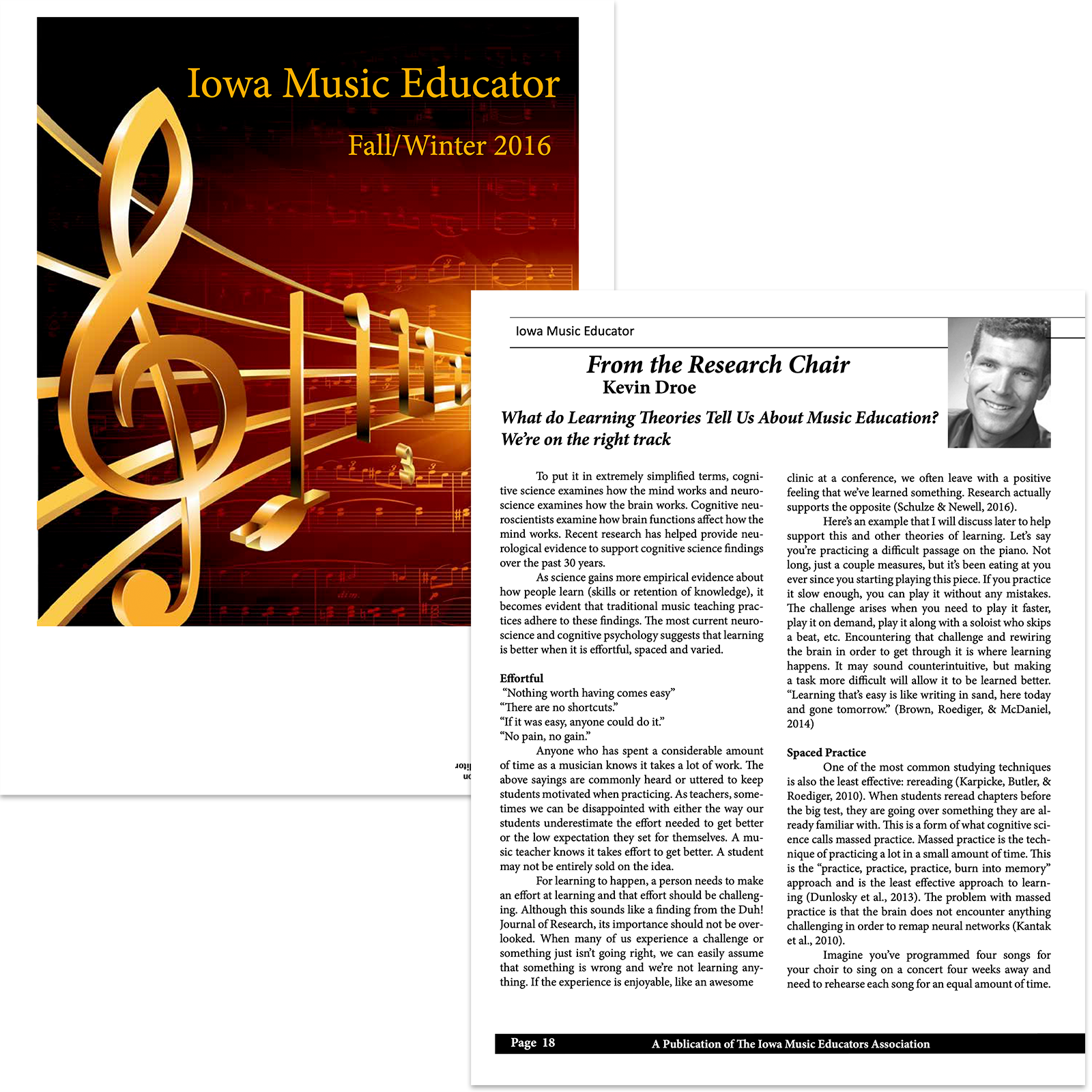
What do Learning Theories Tell Us About Music Education? We’re on the Right
Learning in music is most effective when it is effortful, spaced, and varied. While repetition may feel productive, it often leads to short-term gains that fade quickly. When practice is distributed over time and approached in different ways, the brain is forced to adapt, leading to deeper and more lasting learning. In music, this means moving beyond simple repetition and designing practice that challenges students, introduces variation, and allows time for forgetting and relearning.
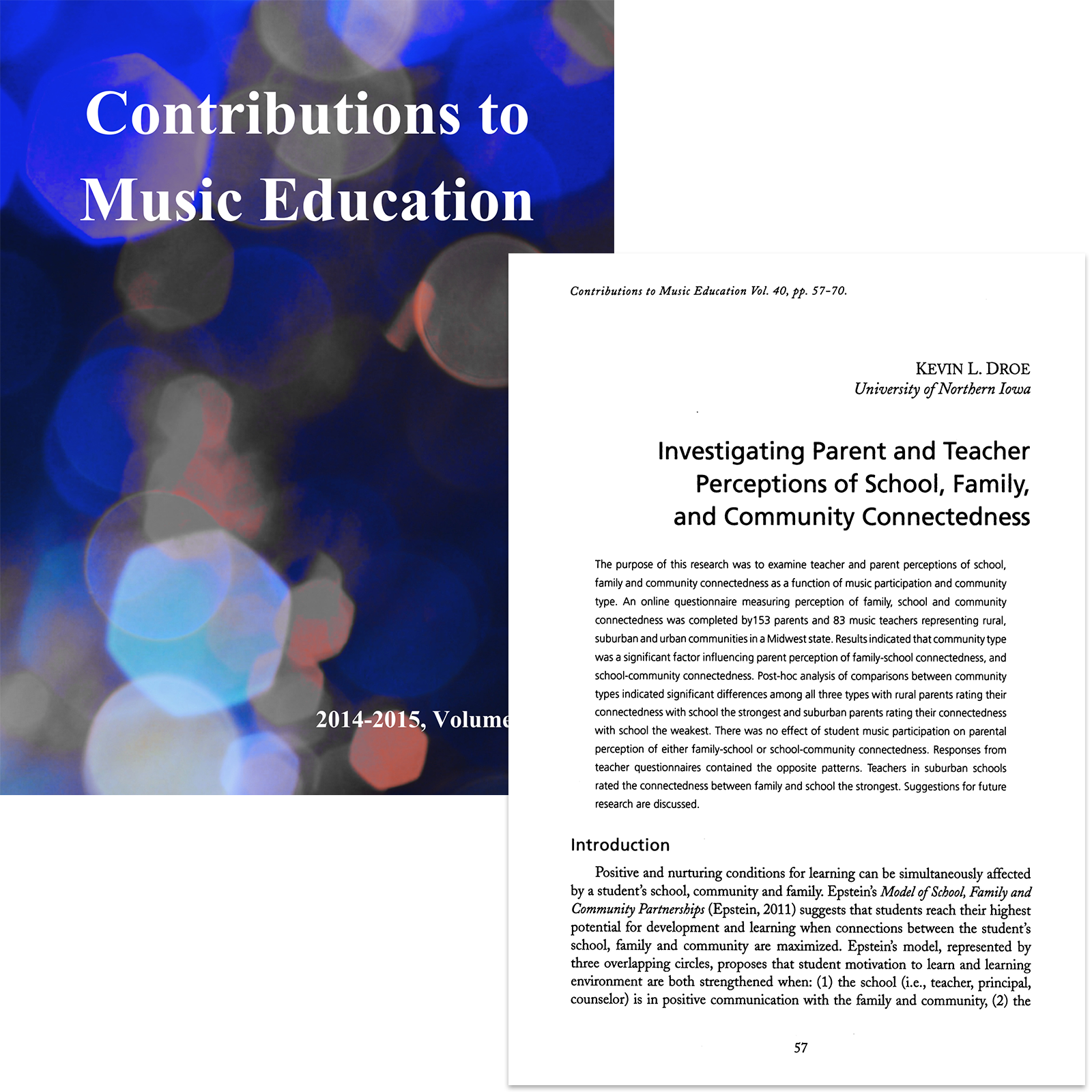
Investigating Parent and Teacher Perceptions of School, Family and Community Connectedness
This study examined how parents and teachers perceive the connections between school, family, and community, and how those perceptions vary by community type and student participation in music. Results showed that community context plays a significant role in shaping perceptions of connectedness, with rural parents reporting the strongest sense of connection and suburban parents the weakest. Interestingly, student participation in music did not significantly influence parent perceptions of connectedness, suggesting that music programs may not function as a primary bridge between families and schools in the ways often assumed.
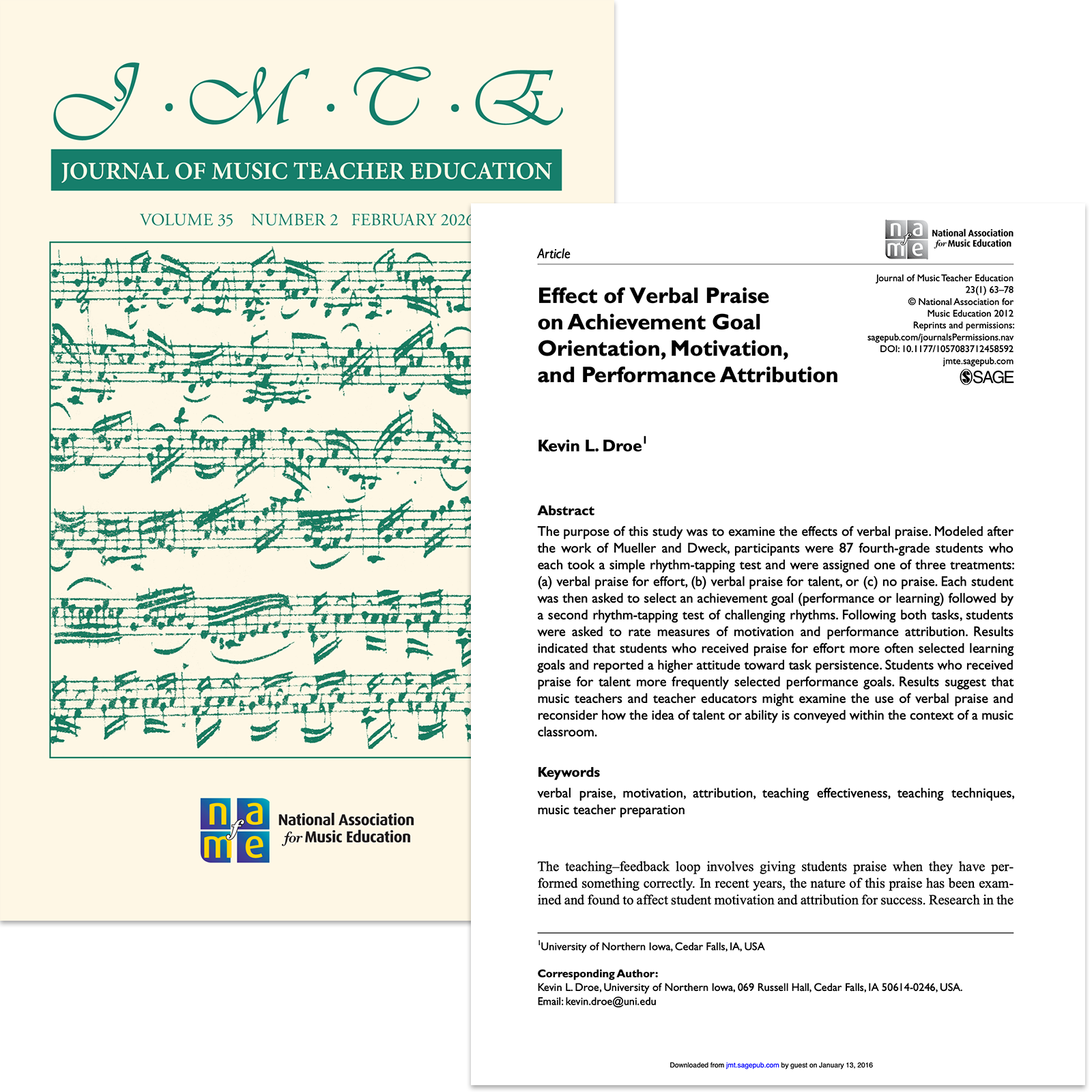
Effect of Verbal Praise on Achievement Goal Orientation, Motivation, and Performance Attribution
The type of praise students receive can shape how they approach learning in music. When students are told they are talented, they are more likely to focus on proving their ability and avoiding mistakes. In contrast, when students are praised for their effort, they are more likely to seek out challenges and persist when tasks become difficult. In this study, students who received effort-based praise overwhelmingly chose more challenging musical tasks, while those praised for talent were more likely to select easier tasks that highlighted their perceived ability.
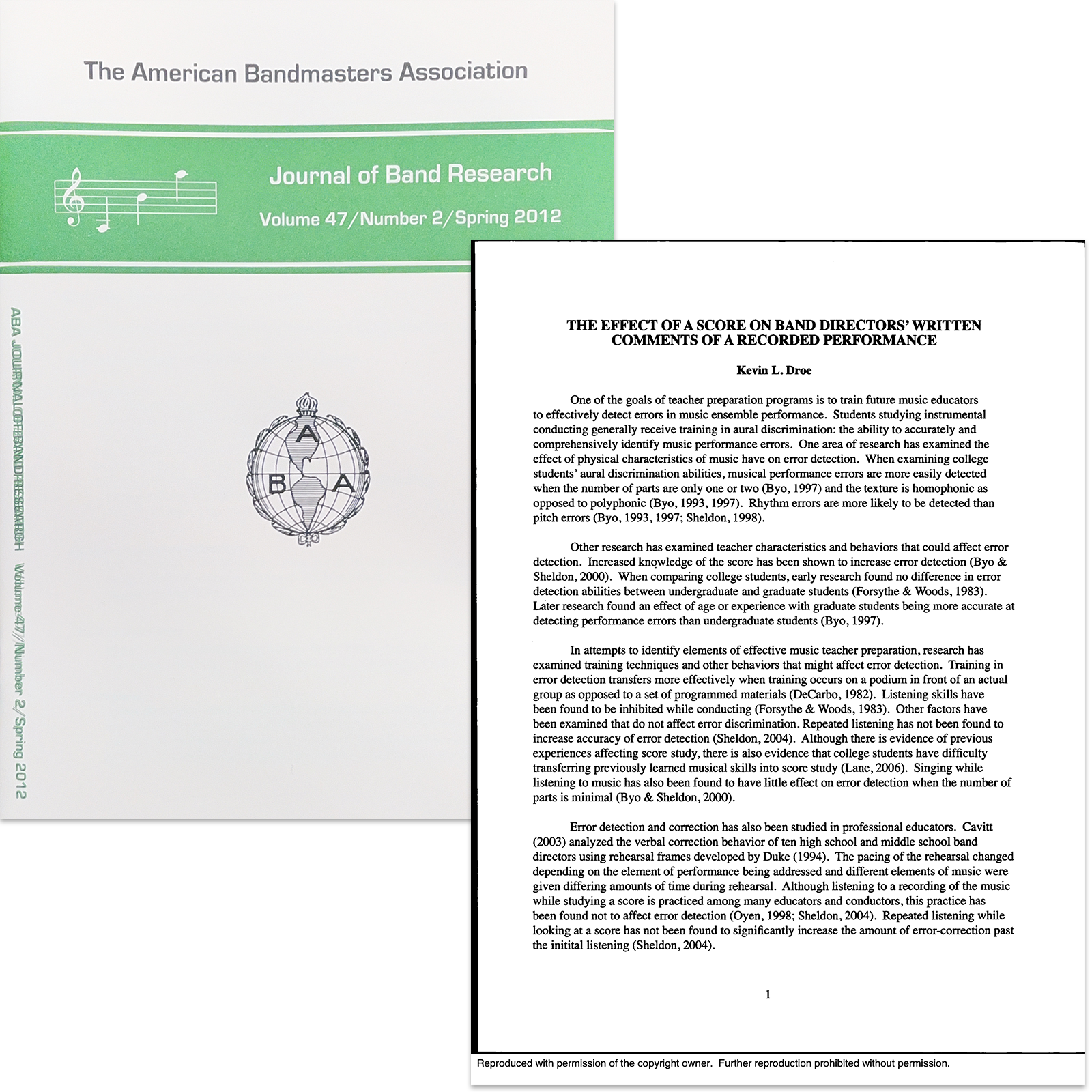
The Effect of Score on Band Directors’ Written Comments of a Recorded Performance
What teachers see influences what they say. When directors followed the score, their comments became more numerous and more critical, often focused on specific notated details. Without the score, their attention shifted toward broader musical elements such as tone and overall sound, resulting in more positive feedback. The presence of the score did not just guide attention. It shaped the tone and focus of evaluation.
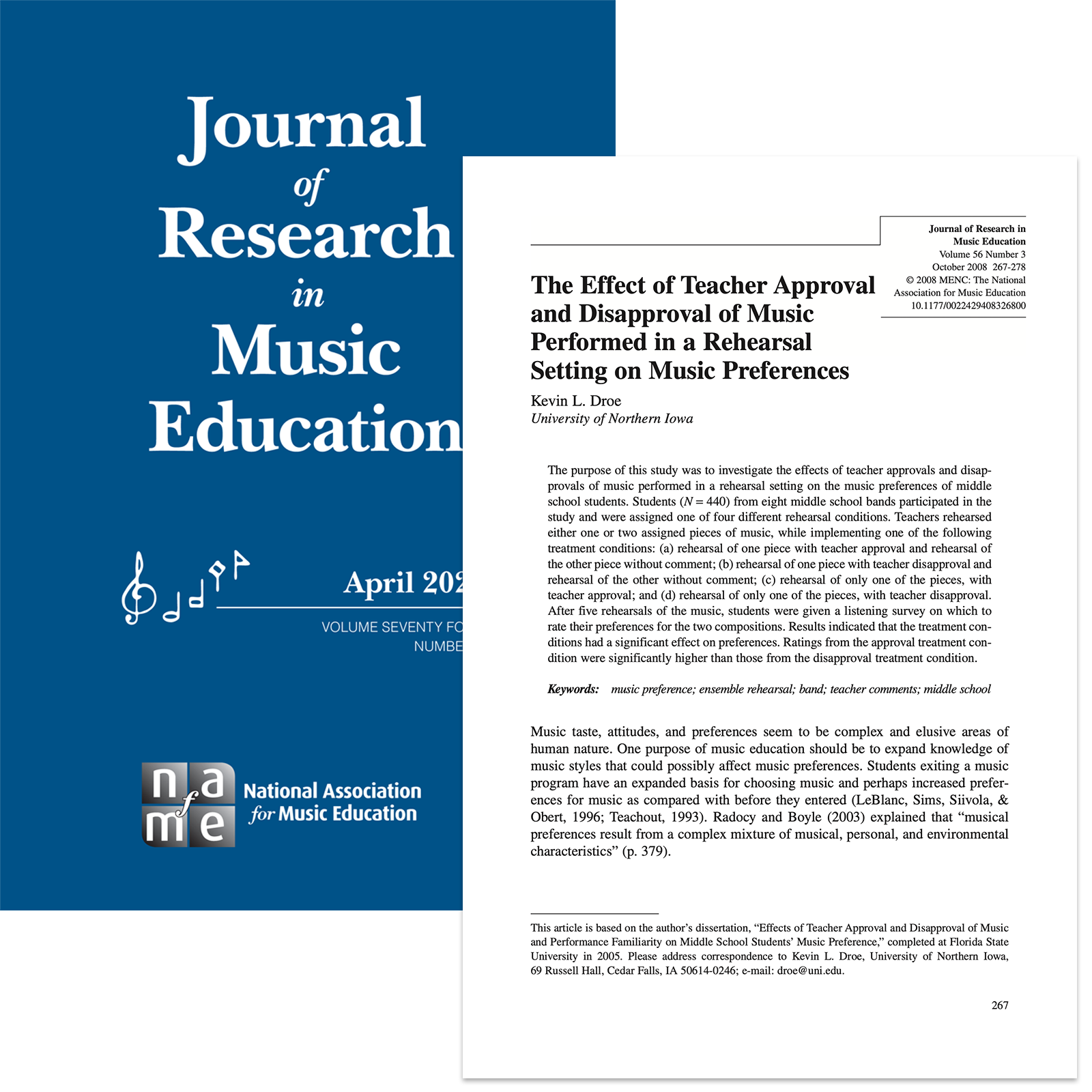
The Effect of Teacher Approval and Disapproval of Music Performed in a Rehearsal Setting on Music Preferences
Teacher feedback had a clear impact on student music preference. Pieces that received teacher approval during rehearsal were rated significantly higher than those that received disapproval. These findings suggest that what teachers say about the music in rehearsal can shape not only how students perform it, but how much they come to value it.
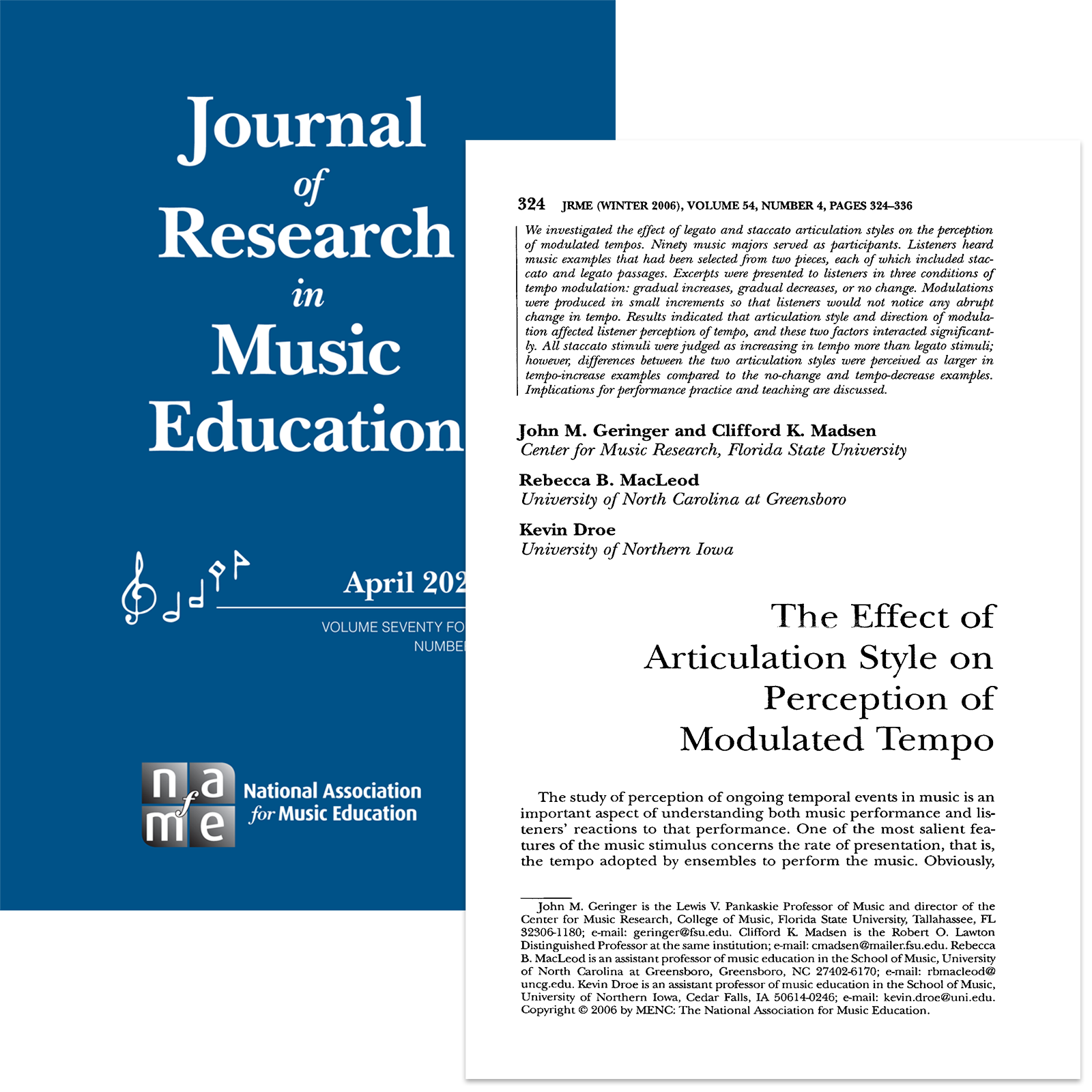
The Effect of Articulation Style on Perception of Modulated Tempo
Articulation significantly shaped how listeners perceived tempo. Staccato passages were consistently judged as increasing in speed more than legato passages, even when tempo changes were gradual or unchanged. This effect was strongest in examples with increasing tempo, suggesting that articulation and tempo direction interact to influence the listener’s sense of motion.
Music Preference and Music Education: A Review of Literature
Students’ musical preferences are not fixed. They are shaped by what they hear, how often they hear it, who teaches it, and how it is experienced in the classroom. When educators understand these influences, they can make more intentional choices about repertoire and instruction, helping students expand their musical interests and deepen their engagement with music.
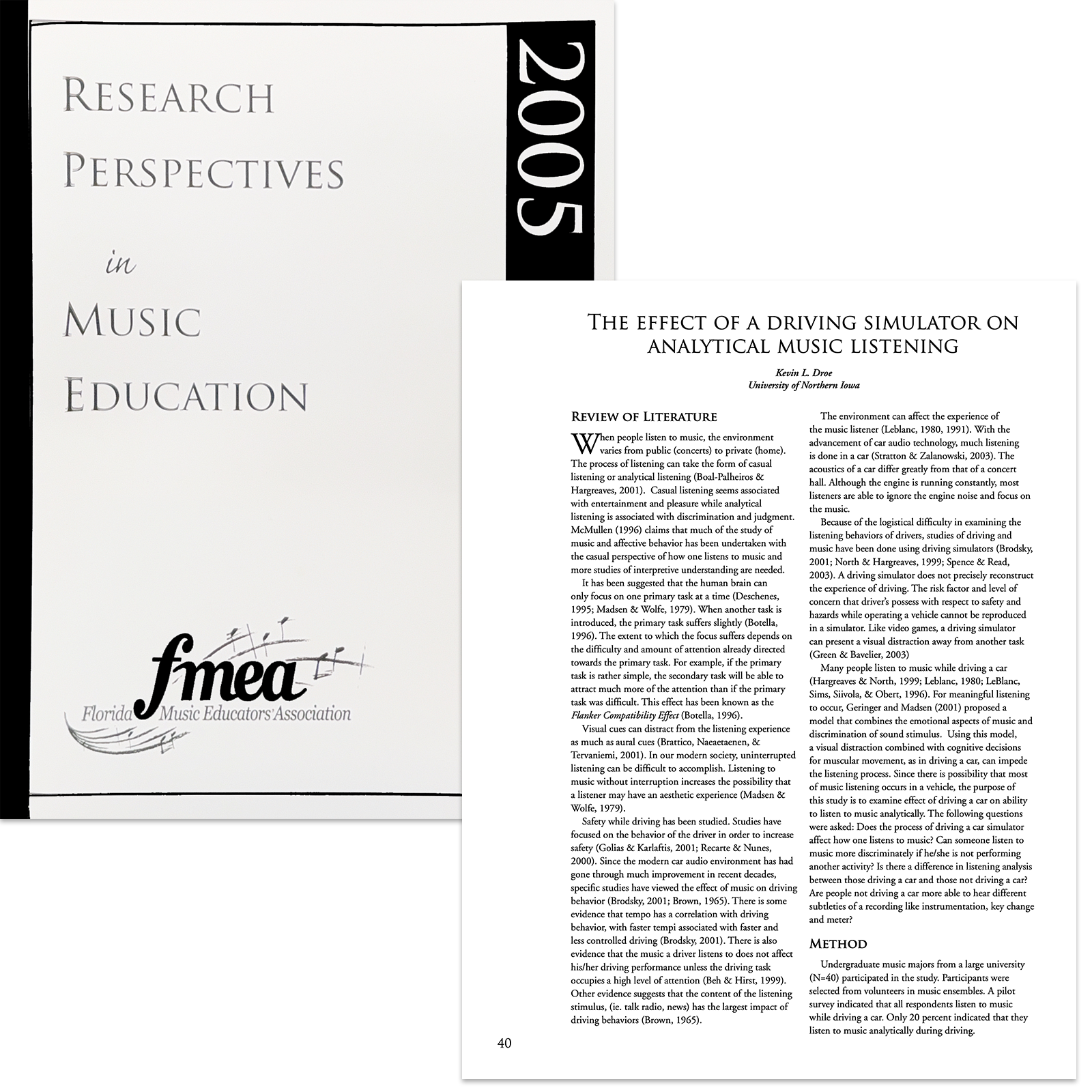
The Effect of a Driving Simulator on Analytical Music Listening
Participants who listened to music without the added task of driving demonstrated stronger analytical listening across all measured areas. While both groups engaged with the same musical selections, the added cognitive demands of driving reduced participants’ ability to attend to details such as instrumentation, style, and meter. The most significant difference emerged in recognizing dynamic changes, suggesting that divided attention can meaningfully impact how listeners perceive musical nuance.